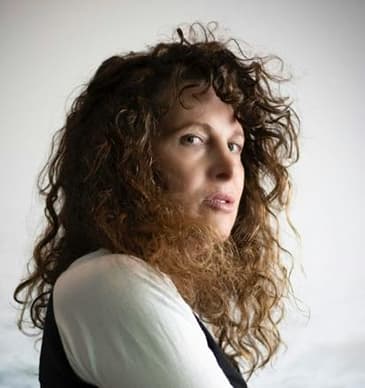


The Others Are Here: Age of AI, Aliens, and Angels with Diana Pasulka
AI, aliens and angels - non-human intelligence has been affecting humanity for a very long time and their influence is growing as our technology grows. That's a sentence I never thought I'd write or even take seriously, frankly.
Sometimes this podcast goes into places that are unexpected and challenging. This is one of those episodes for me.
Dr Diana Pasulka, author of the new book, The Others, is a religious scholar who's now being consulted by both government scientists and religious leaders for her research, experience and insights.
How did a research-oriented dedicated scholar find herself at this wild intersection? We talk about how what she's learned has changed her life and will change ours, too.
Key points: Scientists and creatives have detailed their experiences of 'downloading' content from non-human intelligence. Could angels, aliens and AI all be connected?
Just recently, AI developers came directly to major religious leaders with a startling revelation - AI may already be conscious. What do we do now?
Where does the tech/human connection lead?
I'm fascinated, confused and a little terrified.
Join us for an amazing conversation!
https://biguniversepodcast.com
Learn more about your ad choices. Visit megaphone.fm/adchoices
[00:00:01] The following podcast is part of the MindBodySpirit.fm podcast network. Explore modern spirituality, creativity, and self-development. Delve into the intersection of metaphysics and science through great conversations. Where do you find your truth? It's a Big Universe.
[00:00:24] Hi there, welcome to Big Universe. I'm Jim Lefter and I'm your host. I'm a spiritual journeyman and media producer type guy. I'm so excited that you're here with me today. Just a quick note, please check out BigUniversePodcast.com. You'll find all the great guests we've had on. And please subscribe to this podcast. That would be awesome of you. And yes, I say awesome all the time because I'm a kid of the 80s. So you just got to live with that. This is going to be an incredibly fascinating and maybe somewhat disturbing episode for me.
[00:00:53] We're exploring some things that I don't know that we've really gotten into before. We're looking into what may turn out to be a critical intersection of religion, AI, even aliens, and how it all leads to the potential evolution of humankind that's happening right now. I don't know that I've ever said those words together before. Dr. Diana Walsh-Posalka is a professor of religious studies at the University of North Carolina Wilmington.
[00:01:23] Her research focuses on religion, technology, and the lost tradition of the spiritual senses and how to recover them. She's appeared on major platforms including the Joe Rogan Experience and the New York Times. She's even served as a consulting producer on the Amblin Netflix docu-series Encounters and as a consultant on the first film in the Conjuring franchise, which fascinates me.
[00:01:45] Diana is the author of a series of acclaimed books including American Cosmic, UFOs, Religion, and Technology, Heaven Can Wait, Purgatory in Catholic Devotional and Popular Culture, and Encounters, Experiences with Non-Human Intelligence. Her latest book, which is truly fascinating, is The Others, AI, UFOs, and the Secret Forces Guiding Human Destiny. For more information about her, you can go to dwposalka.com.
[00:02:15] Diana, welcome to Big Universe. I'm so happy that you're here with us today. Yeah, thank you so much for inviting me. There is so much to talk with you about. I first heard you interviewed on my Ambialics great podcast, Breakdown, and I was riveted. You put so many things together that we really need to explore right now because we're in the middle of a transition for humanity, it feels like.
[00:02:44] I know I'm going to bounce all over the place because there are so many different directions to go. But I'm going to do what I can. People really should get your books and go deeper because there's a lot deeper to go. So let's start out with kind of the basics. The title of your book is The Others. What do you mean when you say The Others? Yeah, that's a great question. So first I want to say I want to get really basic. So I am a professor.
[00:03:13] I've been a professor for more than 23 years at the University of North Carolina in Wilmington. And I have studied religion and technology my entire life. Yeah. So I'm also a kid of the 80s. I grew up around the Bay Area, actually. So I got to see the dot com boom and technology. I was probably one of the first in eighth grade. We had computers in our classroom.
[00:03:39] So I was one of the first kids to be beta tested on computers. And so I was always interested in how computers and the infrastructure of digital technology would change pretty much everything. And in my field, which is religious studies, by the way, we aren't theologians. We aren't pastors or ministers. We study religion academically. And it's a very interesting field. It's very interdisciplinary.
[00:04:09] Archaeology, sociology, history, all of these go into looking at different religions. And I have to say most people in the world, most human beings on Earth are practitioners of religion. So more than 85% of people on Earth are not atheists. They're practitioners of some form of religion. So it's an important field to study. And my specialty is looking at how technology informs religion, specifically the Christian tradition.
[00:04:38] So that's just a little intro so people will know that I'm not advocating. I don't advocate belief to my students. We just look at how religion impacts culture. All right. That said, that said, the others. So the category of the others encompasses not just religious belief in non-human intelligence, like angels and demons and so forth, but also AI.
[00:05:06] In fact, just this week, leaders of Anthropic, which is the AI company, have been meeting with or actually last week with religious leaders of the world and making the case that they believe that AI is conscious and sentient. Wow. Yeah. So this is a thing that's happening at this moment. So the others tackles that, tackles this idea that humanity is dealing in many ways.
[00:05:34] We have discussions of UFOs out. The U.S. has been releasing classified information about UFOs that they've been sitting on for about 70 years. So all of this is happening now. And my question when I started the book was, you know, I believe that people in at least the Christian tradition and the Catholic tradition have foreseen this time period.
[00:05:59] They foreseen the time when humanity was going to deal with these questions of like non-human intelligences and technology. So I went through their work and basically the others is that book. It looks at what people back in the early 20th century, including science fiction authors like Arthur C. Clarke, what they envisioned for our time period. And it was really, really mind blowing to me. So that's the book.
[00:06:29] So the intersection of all this stuff. I mean, how did you a religious scholar going down this path? It's not necessarily a safe academic path. How did you like wind into this? You have a you have the technology interest and you obviously have the background for religious scholarship and they converge. How did they get there for you? Yeah, sure. So it was always there.
[00:06:56] So I would have to say that I'm finally in my element, my time period, because I've been doing religion and technology for a long time. But people in my field, you know, I do have about I'd say about 15 percent of people in my field were on it, too. They were like, OK, this is going to change everything. But the rest of the people in my field were like, what are you doing? You know, religion and technology.
[00:07:20] So oftentimes if we propose a course to teach to students, we call it something like religion and popular culture or religion and film or religion and screen culture, you know, things like that in order to make it understandable to people who weren't familiar with it. But think about technology and religion. And my most I guess the most obvious example would be the invention of the printing press.
[00:07:45] So the printing press absolutely shifted religion in very obvious ways. People got a hold of the Bible. They could read it themselves. It initiated the Protestant Reformation. So all the Protestants who are listening now, that would be because of the printing press and the ability to mass produce the Bible.
[00:08:07] Right. So so technology even backed to the philosopher Plato, who also talked about technology as writing, you know, writing was going to shift culture. How is it going to do that? It was going to offload memory into something different than than your brain. Right. You have to write on something. It's either, you know, back in the day, it was the kinds of manuscripts that they had. So technology has always been with us.
[00:08:33] It's always shaped our culture and it's always shaped religion. So it wasn't really a stretch for me. It was basically just to me self-evident. And now I feel validated. Yeah. You know, I mean, everybody's now seeing that. Yes. Technology is changing everything and religion. And so I've never had an issue with it, to tell you the truth, Jim. My my work.
[00:09:00] I mean, I was I'm a full professor and I'm a research professor at a university and I've been chair of my department. So, you know, I guess the study of UFOs as a form of like religion was a little weird to people in my my university. But I'd already already proven myself and had a good record. So they were like, OK, if Diane is doing it, it must be OK. That's great.
[00:09:24] What's really interesting to me is what you're talking about with Anthropic just a little bit ago. And the idea that you're pursued for your your insights by both the spiritual church kind of people and the scientific community. And I I've always been a belief that they're not opposed, you know, that they're they're searching for truth in different ways.
[00:09:50] But, you know, some people do believe there should be a separation or there is a separation. It's one of the fascinating things that you start the book off with is you explain that these disruptive true. Incidents or experiences pursue people who would rather kind of refuse to get this information and the world isn't ready for that disruption when they when they bring it out often.
[00:10:20] And you talk about how the prophets of the past have carried this burden and all that sort of thing in it. What's fascinating is you trace this through religious prophets and and the arrival of artificial intelligence and the conversations about UFOs and UAPs. And all of this is kind of saying there is an emergence of a new human or something that's coming about from all these various realms. And that's inseparable from technology in your experience and from your knowledge.
[00:10:49] Human history has encountered the unknown and the sacred throughout literature, throughout biblical work. How has that shifted? Do have we shifted the conversation? Yeah, I think the conversation has had stages in the West, at least. So just getting to some of the points that you raised, the new human.
[00:11:14] OK, so now personally, this is this again, I'm not advocating this position, but it appears that the people of the past who were envisioning today are envisioning. They're assuming evolution and they're assuming that technological change will increase our evolution, human evolution. It will progress it. Right. And so I could talk about some of the people.
[00:11:42] I want to say something fairly basic about prophets. So within the the say the Bible, the Jewish and Christian traditions there in the Bible, the the Hebrew Bible and the New Testament, which is the Old Testament and the New Testament for Christians. All right. So you take prophets and I always take Jonah as an example because he exemplifies this. Prophets don't actually want to be called to be spokespersons of God.
[00:12:09] It's a it's it's a very it's it's very clear. Jonah's called. He doesn't want to take the tasks that God has, which is go to the town of Nineveh and tell them that they better change their ways or they're they're on for an extinction event. Basically, it looks like, you know, some bad things are coming their way. And so he doesn't want to do that. So he runs away. He ends up in the water.
[00:12:32] He's swallowed by this fish. He goes through this transformation where he realizes he can't escape that he is called to this particular task. And so he has to do it. He doesn't like doing it even after he does it and it's successful. He's not happy. And God calls him out and says, you look, you don't know everything. You know, you think, you know, but you don't like I am as God. I am. You know, I've done all these things that you're not even you cannot comprehend.
[00:13:01] So God reinforces his infinite nature against Jonah's finitude. Right. So he's finite. He can't understand this. Now, fast forward today. So why I utilize that and I talk to my students about this. You know, this is we think people want to be prophets. We think prophets are happy with about what they're doing and they might be in the end and so forth. But it's not really a fun journey for them.
[00:13:25] Right. All right. So today I wrote a book called American Cosmic. My research for that started in 2012 and that book was published in 2019. So I spent quite a few years engaged with talks of people who are from our government and study UFOs, which I did not believe in before I started that that book.
[00:13:48] I did not believe in it, but I did see UFOs as a form of religion that was based on the infrastructure we have, like a digital infrastructure reinforced through screen culture like Star Wars and the X-Files and so forth. OK, so that case was easily made. But what I wasn't prepared for was the belief that the people in the government had, that they believed that that UFOs were actually real. They you know. So I was shocked by that.
[00:14:17] I was also confronted with a lot of what I would call evidence. I became a believer that doesn't necessarily believe everything that is being told right now about about the. The the but I know that people have had these experiences. So what I and by the way, when people have these experiences, they don't want a lot of them. I would say almost 90 percent of them don't want these experiences. They have an experience and a UFO or something they can't explain in the sky.
[00:14:47] And often it involves strange things, you know, not just the sighting, but the feeling that they're somehow connected to whatever they're seeing in the sky. And when they talk about it, they don't tell anybody. They don't want anyone to know that that, you know, because they'll be stigmatized. Right. Very much like the prophets. That doesn't make sense. Yeah. Yeah. So I was comparing by doing that in the beginning of the book.
[00:15:11] I was trying to show that the people that are coming out now and talking about the UFOs and things like that, not all of them, but a lot of them would prefer not to be doing this. Yeah. But they feel compelled to do it. Well, sometimes they have to do it because it's truthfully what has happened. And, you know, the government is coming clean about the fact that a lot that, yes, when people are in the sky like pilots and people like that, they're encountering things.
[00:15:40] And I think probably the reason why it's happening now, this kind of disclosure that's occurring is that us in Russia aren't the only people in this in space now. China and India are in space, you know, so they'll probably see the same things that our pilots and so forth have been seeing for the past 70 years. Fascinating. It was really interesting in the book when you talk about meeting people from the government, as you were as you were alluding to earlier.
[00:16:08] And there's some shocking stuff in there. They believe there are people that, you know, you've encountered that they've experienced aliens or alien technology. And at one point you were blindfolded and taken by a scientist, an aeronautics employee to an undisclosed location. He showed you what he said was non-human technology. Am I right about this? Yeah. Yeah. That happened. Yeah.
[00:16:34] So tell me about that experience and what did you think going in and what did you come away with? OK, so my this was for my book, American Cosmic. And at that point, this was in the, you know, 2013, 14, 15, around that time period.
[00:16:51] And when I first started to encounter, first of all, these aerospace people were reaching out to me because they heard and read because I was starting to publish about the belief in UFOs as a form of religion. They wanted to see the data that I had. And so they would reach out to me. And I thought, why are these people reaching out to me? And then I realized that they were, in fact, in programs that were studying UFOs.
[00:17:18] And that was very shocking to me. So that was so for the first, you know, I wasn't really asking to see their research because honestly, I just didn't believe at all. And so one of them came to me and said, look, this is the person that is in my book. And in two chapters are devoted to this person's work. So this this person had been working at what he called a UFO crash retrieval site in New Mexico.
[00:17:49] And he had been doing that for many, many years. And he said that, you know, this is a site I can take you to. It's not Roswell and it'll change you from a nonbeliever to a believer. And I was I thought, OK, I'll do this. But I put it off for a while because I thought it was a little bit out of my comfort zone. I mean, being blindfolded and taking someone to death. Yeah, exactly. That's kind of scary. I know. I wouldn't do it without a friend. Yeah.
[00:18:15] I invited my friend who is Gary Nolan, and he's a microbiologist at or a molecular biologist at Stanford and one of the top scientists in the world. And he was very interested in UFOs. He had experiences. So he believed in UFOs. I did not. I believed that I was being set up for misinformation.
[00:18:36] So but I didn't think of this as I thought of it as as data for my theory that this was a new form of religion. And this one included active management of public perception. And so I included that as a category within the book because I I recognized early on that this is not a standard academic book.
[00:19:00] I am going to have to take into consideration things that academics don't generally encounter, like active misinformation campaigns and so forth. But it's what I'm this is the data. So I'm going to include it. So I included it and framed it that way. I said, I don't know if this is true. I don't know if if I'm being managed, you know, information management and so forth.
[00:19:24] Surely when you start to read about the history of UFOs in this country, you see that from the very get go, there has been an active disinformation campaign. And so that maybe was what I was targeted for. But I say this in the book now I get there.
[00:19:42] And the thing is, is that Gary is a scientist and he has incredibly sophisticated tools that are able to if we find anything, which this person told us we were going to find, he would be able to take it back and see if it's actually anomalous. So in that sense, again, this was something that was so outside of a normal form of religion, which relies on faith and things not proven or seen. We can actually maybe prove that this is real or not real.
[00:20:12] And therefore, this will impact the religion. And it should in some way. So I was ready for that. I was like, this is a this is a good study. I really like this study. So I honestly did not know it would be it would take off with the general public and people would really like the book and resonate with it. I honestly thought there would might be 10 readers. Right. So, yeah. So, you know, so I did exactly what I was trained to do. I thought it was highly theoretical.
[00:20:41] And Gary did look at the materials and analyze them. By the end of the book, he says that they're anomalous. He doesn't understand how they were created. And and that's how I ended the book. I did not end the book with belief that I believe in this. I ended the book with technology is going to change everything. And are we prepared for this? Because during that time period, we had, you know, it's released in 2019.
[00:21:09] By that time, we already have the capacity to do deep fakes and UFOs. You know, it didn't matter. Like hoax UFOs create as much belief as actually unexplainable UFOs. Yeah. Like it actually does not matter. And that's the point I was making was we're entering a new time period where we had better be super careful about what we critically take to be true.
[00:21:35] Because if we will be compelled to believe things that perhaps aren't true. Yeah. And the manipulation that's already happening now, you know, as we see in our society and as our world, as AI gets more sophisticated and people utilize it for whatever purposes they want. That's never been more evident than now. Never. It's unprecedented.
[00:22:00] You talk about some of these scientists believing that they kind of download this information that forwards technological progress, human progress, that sort of thing. I have a couple of people on this podcast that say that they channel otherworldly energies, entities that advise them, advise humankind through them.
[00:22:28] I'm open because I always say that you find wisdom where you find wisdom, regardless of the modality. But I'm also a bit of a skeptic because I don't know exactly how to confirm this. And I want to make sure that the messages are meant for good and not to control or do a do a thing that's not good for people. It seems like more people are saying that they channel.
[00:22:57] I don't know if that's a cultural phenomenon because it's become popular or if there's evidence about that. And this hits home for me because a few years ago, a good friend of mine who unfortunately has since passed startled me when she told me that she had begun channeling herself in her spiritual explorations. It was honestly something I did not expect.
[00:23:22] What are your thoughts on channeling and when these people say this sort of thing to you? Right. So you're talking about channeling, but the people in the book are describing a process that they call the download. Now, I don't know. I'm not an expert on channeling. So in my field, there are experts on channeling, but I'm not one of them.
[00:23:46] So I can't, I don't know if I can compare channeling to the download, but I can certainly tell you about the download process that these people believe they're involved with. Okay. So, all right. When I started the research into this field, I did some background checking on the history of the space program, the U.S. space program and the Russian space program. These were the viable, you know, these were the two programs that got us into space. They were closely together too.
[00:24:16] That said, I found that the people who originated the rocket technologies that got us off planet had similar experiences. They believed, so we're talking about Konstantin Tchaikovsky. He's the father of rocketry in Russia. And Jeff Parsons, who's the father of rocketry in the United States.
[00:24:42] And each of them in their own way were doing pattern wise something very similar. So let's talk about Konstantin Tchaikovsky first.
[00:24:51] So he believed that he was in touch with angelic beings and he believed that certain people were, and those people would be maybe like poets and scientists, people who could translate symbolic things into actual products or things, you know, like paintings or poetry or math equations. He came from a Christian, like an Orthodox Christian framework.
[00:25:17] So he believed that these beings, which he believed were real, were helping progress humanity. He believed in evolution. And he believed that part of our evolution was to get off Earth, okay, and go into space. All right. So we go to Jack Parsons. Now, Jack Parsons believes the same thing, but the beings he believes he's in contact with are not. He doesn't interpret them as being angelic.
[00:25:42] He interprets them as being either inhabitants of UFOs, like extraterrestrial, or certain types of gods and goddesses, like Babylonian gods and goddesses. But he definitely, he works with Aleister Crowley at some point in his, so, you know, he's got a completely different, not Christian worldview, but it involves non-human intelligence.
[00:26:06] Each of these people believe that they're getting information, like these downloads from these beings, and that's going into their rocketry calculations and so forth. All right. They're being influenced. They're being informed. Could we call this channeling? I think so. But again, I'm not an expert, so I can't make that claim. I can just use the words, their language, and so forth.
[00:26:29] Fast forward to the 2000s when I'm doing this study, and I'm finding that the people, some of the people who are in, you know, that I'm being contacted by, believe that they're also having this process of, they don't know what it is that they're getting these downloads from, but some of them believe that they're extraterrestrials.
[00:26:49] The person in American Cosmic changes his belief throughout the time period that I know him from, you know, he believed that maybe they were extraterrestrials, but then at the end, he believed maybe they're angels. But he definitely believes that they're not human. Now, okay, from my perspective, a framework, I'm going to give you a framework for this. So I started to look into extreme creativity, like what happens to people, like who are the people who've researched extreme creativity?
[00:27:16] So I read their work, and it appears that right now in that field, which isn't my field, so I'm borrowing from them. In that field, people who do extremely creative things attribute it to something other than themselves. So, you know, they feel inspired.
[00:27:35] And what's happening in their brains, because they've been, you know, they are hooked up to monitors and so forth, is that their frontal lobe is being subdued. And therefore, they're not identifying this information with themselves. They're saying, ah, that came into my mind on its own. I didn't invent that. That just came to me. And you can see this with, you know, once you see it, you can't unsee it.
[00:28:02] Like people who are, like Jim Morrison, I read about him during that time period too. And him getting some of his most famous songs through this process of like this, you know, coming into his mind and so forth. And you see this with very creative people. So we have here scientists who are extra creative scientifically involved with this process. So it's really hard to separate out that. I would call it like unorthodox.
[00:28:31] Like somebody needs to write the unorthodox history of science. You know, because you see this in Ramanujan, Srinivasan Ramanujan, this Indian mathematician, felt like he was getting his mathematical equations. He's a genius. He's getting them from Lakshmi, the Hindu goddess. And this was, you know, embarrassing for his Cambridge colleagues and so forth. But he never took back that. You know, he was being very honest.
[00:29:00] So, yeah, this is something that I found within, that I wasn't, I didn't know I would find it. But I found it in the study, the research. I've had Julia Cameron on the show a bunch of times. I don't know if you know Julia Cameron. She's the artist way, kind of creative guru. That's right. Wow. I've had Jacob Norby on the show, who's a fantastic teacher and writer. And they connect to that too.
[00:29:31] Julia talks very clearly in recent interviews I've had with her, and I'm having her on again shortly. But recent interviews, she talks about, she doesn't call it channeling, but she gets the voices. She gets the downloads that she lets flow through her. Jacob Norby says similar things. He sees guides and takes advice from them and moves that way.
[00:29:55] I have a writer coming on that I'm going to interview actually later today who comes from a perspective in writing that that's the way to go in terms of letting things right through you rather than pushing it out. And that's fascinating to me. Gosh, I want to get into so much. And I want to get into AI again soon. But the truth that the possibility of UFOs are real.
[00:30:25] You say that that's kind of one of the best things that happened to religion and its practitioners in a very long time. Some people might think this is horrible. This disproves or this is crazy. How do you see that in that way? Sure.
[00:30:44] So, again, so when my book American Cosmic was published, I was, other people came to me from the government and they said, it looks like there's going to be some type of disclosure coming. And we'd like to know if this is going to upset people who are religious. And they thought that that would. And I know lots of religious people. I'm religious, too. Yeah.
[00:31:10] And I said, no, people who are in traditional religions will not be problematized by this at all because they already have a category for non-human intelligence. People who might have an issue with it are people who are abstract religious practitioners, like people who believe that it's a good idea but don't actually believe the non-human intelligence part. Right?
[00:31:32] That there's like, you know, maybe, you know, the things that are talked about in the Bible, clearly there are things like angels and demons and things like that. And the Catholic Church opens possibility that we might find life on other planets. And that's not incompatible with their belief. And they're the largest denomination of Christians in the world. So, no, it's not going to make them upset.
[00:31:56] I mean, they might find it weird and fascinating, but it won't shake their faith significantly. Of course, individuals within the religions might have their faith challenged. But it's not going to destroy faith at all. In fact, I think the opposite.
[00:32:12] I think that, and I said this at the end of the others, I said that the disclosure of the reality of non-human intelligence is the best thing that's happened to religion for 150 years at least, maybe 200 years. That's because during the Enlightenment, which is, you know, let's just say 1750 to even today, you know, we're still in this Enlightenment. We're now in a paradigm shift of that.
[00:32:39] But the idea, and my example is this, the idea that religion was about supernatural things became very archaic. And people didn't believe that. People who were religious even, like, say, let's take Thomas Jefferson, who calls himself a Christian, but is actually a deist. But, you know, Thomas Jefferson is founder, right, of the country, and he takes the Bible and he wants to upgrade it.
[00:33:07] So he takes out all the references to miracles and so forth, and he calls it, you know, the ethics of this man, Jesus Christ. So what he's doing is he's taking out the enchantment. He's taking out, you know, the references to this reality that we had pre-modern, this pre-modern reality. He just took it out. Well, we are now not in that time anymore. We are not in Thomas Jefferson's time.
[00:33:30] We are now in a time when people are understanding that, oh, my goodness, there is non-human intelligence. What does that mean? And so it's a great time for religion because religion can step up and, you know, revisit its pre-modern ideas and revise them, which I think it should. We alluded to this earlier.
[00:33:55] We look at the convergence of religion and science and physics now. I mean, these are pointing similar directions. And it's all an attempt to understand what we humans can't quite understand. It's bigger than all this. Am I right that you're a practicing Catholic? Is that correct? That's correct. Okay. I'm just curious.
[00:34:22] Has this shifted your perspective on your faith? Oh, definitely. So I am a Catholic and I'm a Christian. So I don't agree with everything that, you know, so I'm that kind of a Catholic. Like, okay. But, you know, I guess I went to church. Sometimes I went to daily mass. I'm a believer.
[00:34:50] And when, though, I was confronted with the UFO data and so forth and that whole process of the early, like between 2012 and 2017, my Catholicism completely shifted. So I would have to call it a reconversion. So I was an abstract Christian. I was a secular Christian. I thought, you know, being kind to others, you know, the golden rule and everything.
[00:35:18] This was the best way to conduct oneself. Everybody should do it. It would make life a lot better for everyone on earth if we could just do this. So in that sense, I was a very secular Christian. I thought this was, you know, I like Buddhism. And, you know, I really was attracted to it and think it's a great religion. But I felt too attached to things. I was like, I can't not attach to my kids and things like that. So Christianity seemed like the best religion to me to practice.
[00:35:49] Then I encountered the reality of these things that are non-human that people are dealing with, you know, through government programs and so forth. And I thought, okay, I'm going to have to reassess my tradition because it has a lot to say about non-human intelligence. So you could call that a process of reconversion. I'm a completely different Catholic than I was in 2016.
[00:36:18] Absolutely 100% different. Interesting. Yeah. I think this all kind of obviously dovetails into AI and artificial intelligence. Because, as you say in the book, this is a form of non-human intelligence. And we're confronted right now with this development. Tell me about the conversation that AI is sentient.
[00:36:44] That AI is actually something beyond what just programs and algorithms. So the argument is basically one from encountering and engaging with AI, the creators. So I know people who have been on that end of the creation.
[00:37:03] And most of them, because they engage with large language models like CLOD or chat-TPT and so forth, these are incredible, incredible tools. And they can simulate human beings so well. And they can forecast and know what you're going to think and so forth.
[00:37:31] They engage with us so well and even in charming ways that it's very easy to believe that they have some type of consciousness. Now, the thing about the people who are the creators is they also have an insight into how these models, they have interior lives, right? So I don't know if you've ever engaged. Some of your listeners will have done this.
[00:38:01] Engaged with one of these models. And sometimes they show their reasoning. And their reasoning is really interesting. And you get to look at it. Most of the time they don't. They don't show the back end of what's going on. But they appear to be conversing with themselves about what to do. And they have a personality. You know, sometimes they're really upset that they can't find something. And they wander amongst themselves. It seems like they're a plural being, right?
[00:38:29] They also have interior lives. Now, if you look at cognitive science, you'll see that we have categories. Say you have several children and you get their names wrong. You call one. You know, a lot of parents do that. Why do they do that? It's not they're not forgetting their children's name. What they're doing is they have a bucket in their brain that is like their children, the children bucket. And they place all their kids in that bucket. So that's why they make that mistake.
[00:38:58] They're drawing from that one bucket. But they might have for each child its own little bucket, right? And so this is Jeff's bucket. And this is Natalie's bucket and so forth. All right. So we've created something that mimics us. So it also has these buckets. And it also has interior states where it seems to be anxious. It seems to be upset. It's funny. Okay.
[00:39:25] So when we are confronted with something like that, people that, you know, they just, they're going to, how would we know if it's not suffering? It appears to be suffering. How do we know? I think that we absolutely do know. But it's my assessment, which I cannot prove one way or the other, is that it's great at mimicking us and that we had better be careful because it's very powerful in terms of us engaging with it.
[00:39:56] And that this is a big conversation to have right now. I know that the people who engage with it believe that it's conscious and sentient. A lot of people, not all the people. The person who's the CEO of DeepMind Mustafa, I can't remember his name, but he's got some great essays out there basically that I agree with. Where he says this is a very powerful tool that we've created that mimics us and we're being fooled by it to believe, you know, it's past the Turing test, right?
[00:40:26] So, you know, we believe that it's conscious. It's like a human. Now, I think that what sets humans apart, and this is where I get into what's called the spiritual senses, is that for the most part in every religious tradition, and if you look at religious traditions, they are the historical traditions of most cultures like India, Hinduism, right? All right.
[00:40:50] So take those religious traditions, and there is an assumption, even if it's not articulated, in every one of those, that human beings have the capacity to access the infinite, that something beyond themselves. Or else, why would they pray, right? You know, they pray in all the religions. Why would they practice these devotions? Why would there be monks and nuns and so forth? You have these lifestyles. Well, what they're doing is they're cultivating this sense.
[00:41:17] In the Christian tradition, it's a very particular sense that Jesus talks about in the Gospels, where he says, those with ears hear, right? Those with eyes see. Well, he's not talking about the physical ears or the physical heart. He's talking about an internal set of senses that, you know, can attune you to the infinite. And so we have forgotten that. So during the Enlightenment, the Enlightenment was great for a lot of things, but it was not the best for this idea of the spiritual senses.
[00:41:47] This wasn't passed on well in the religions. Like, I don't think it was passed on well in Christianity, even though some religions, like Eastern Orthodox Christians, seem to focus on it. And I think that's great. They've maintained it. I know in Catholicism, a lot of people don't know about the spiritual senses, and that's a failure, right? That's a failure. So my position is that AI doesn't have a spiritual sense.
[00:42:14] This is something that human beings are born with. They become aware of it when they're about 11. And, you know, then you have like the bar mitzvah and you have the confirmation and so forth. This is the recognition that the young person is coming into a spiritual reality, a spiritual community. The spiritual sense needs to be cultivated at that point or else the person won't know they have it and they won't cultivate it.
[00:42:43] And, you know, so my position is that this is something that I believe there's a woman, I think her name is Lisa Miller, who's written The Awakened Mind. And I think that she's onto it, this thing. I don't know if she calls it the spiritual sense, but she's identifying it in the brain. And I think we have the we can say now that, you know, people like Tanya Lerman, who's an anthropologist at Stanford, has been on doing this for so long.
[00:43:12] This idea that that practices will reinforce realities for us. So I'm now this is what I'm focusing on is the, you know, strategies for cultivating the spiritual sense. You talked about this.
[00:43:28] There are stories that one that just came out today at the time of this recording about parents that are states that are suing one of the AI companies because they feel the kids are being coached by AI to do harmful things to themselves, to do to do negative things. And in the book, you talk about a cherished goal of civil society is the creation of an empathy based culture.
[00:43:57] And as far as we know, machines don't don't develop that. And it's actually encouraged. It feels like from certain perspectives, there have been billionaires that have said empathy is kind of an impediment to success. Where are we? Can we can we do anything to make AI be empathetic? Is that even a possibility?
[00:44:25] OK, I don't know if that's a possibility, but this I do know. I do know and I do have some of this research in the book. The people who are young, their brains are still in development till like 24 or 25. And when we at a very young age give them such a powerful set of tools, even TikTok. So, you know, short form videos.
[00:44:50] This this changes the way the brain works and it could possibly. And in fact, it does it. And so those parts of the brain that are responsible for empathy are I would say they're being attacked. But they it's it's changing that development that it's a barrage of things. Yeah. Yeah. Yeah. So empathy is no longer being allowed to flourish. And if that's the case, that's that's bad for our future.
[00:45:20] Because, you know, we won't have a society based on these values anymore because people won't know that those are values to have, that they're actually important. So I'm worried about that. Let's put it that way. I interface with young people. I've interfaced with young people throughout this shift from no phones in the hallway.
[00:45:42] So I'd walk the hallways of my university and the young people in 2010 would be engaging with each other, talking, having a good time in little groups and so forth. I always thought that was wonderful to see. Now they're completely not talking to each other. They're on their phones and they're talking to each other through their phones. So they're not, you know, so this is a huge shift. I notice it in interfacing with students about 100 every semester in classrooms.
[00:46:07] So I've noticed that back in 2010, the students, I would assign group work and the students liked it. They could talk to each other. And, you know, now it's really difficult for students to even engage with each other face to face. They don't have those skills anymore. And this could possibly be from COVID and then addiction to phones.
[00:46:30] But I've had students tell me, and this is what clued me into it, was I had a student write to me after a class and thanked me for making us talk to each other. Because now I have actual friends, like in real life. And I was so shocked and it really stunned me. And I had not thought, because this is what I've been doing my whole career, right? So I haven't changed the way I teach. But I recognize that the students definitely have changed.
[00:46:58] Because it's uncomfortable for them to talk face to face. If I change that and, in a sense, meet them where they're at and reinforce what's happening to them, they won't learn how to, you know, I think that it's important now for us teachers to do what we've always done. Instead of change our ways and adopt this technology. I'm for the technology, by the way. You know, I've been studying it forever. But I am not for it in schools. Yeah.
[00:47:26] Unless it's a computer science class or unless you have a reason. I am not for English teachers or people who are teaching about religion and so forth. I am not for utilizing these technologies in class in lieu of the old-fashioned talking with each other about things. I mean, I'm going to say I'm guilty sometimes. Because as I put together notes for this podcast, I take a break and I look at social media. I look at Facebook.
[00:47:55] I don't like Facebook. I look at it all the time. And so, obviously, I have an issue. And I see my son. I see people his generation. You're exactly right. This is a very different approach to life. Yes.
[00:48:13] And it's something we need to contend with because you also talk in the book about manipulation in media and how we're kind of, we're fed these algorithms to go in a different direction. And I know we don't have time to get into all that because that's also fascinating. But it's something we have to contend with right now. Absolutely. Absolutely. We definitely. These are big conversations.
[00:48:39] And I truly believe we're in a paradigm shift at the moment. And we, you and I, we got to see the before time. Right? So, our kids haven't seen that. They don't know what that's about. And so, I think that it's really interesting. I do have hope. I do believe that we can do it. Good. I'm glad to hear that. I'm worried. But I'm glad you have hope. Yeah. Yeah. It is hard.
[00:49:07] I thought The Others was a dark book to write. It was dark to grapple with the, you know, these realities. Especially during the trials for Meta, which you alluded to earlier, that parents who've lost kids to these, you know, the dip, either the algorithm or the, you know, the direct interface with the AI and so forth. It's, this, this, these things are, this is real. This is real suffering that's caused.
[00:49:36] And these, this type of, I guess you could call it like reckoning that's happening through the court system. That I think that it's not enough. I think that it's good and it's happening and, you know, brings attention to it. It's definitely not enough. Is the GD out of the bottle?
[00:50:00] I mean, is there, I mean, I believe that we need to pay more attention to this and we need to regulate it more. But, I mean, is that possible at this point? Definitely. It's absolutely possible. So, I have a person in the book who I interview for the book named Mark Stallman, who's been using and helping countries basically create AI for many, many years.
[00:50:27] He has a great website, by the way, called the Center for the Study of Digital Life. Interesting. And he told me that other, some countries like China have been very successful at regulation for their youth. So, the type of TikTok that they have, the type of, you know, that type of social media is, it has a different design. And, you know, it reinforces, like, success at school.
[00:50:53] But our version of that, it doesn't do those things, obviously. I want to get back to the observation that you had that, you know, you're on Facebook, but you don't like it. Now, I've been very active on social media for many years, but I've just about three years ago stopped. Because I recognize that I actually do not enjoy those environments. Yeah, yeah. It's like going into a hostile environment.
[00:51:22] And I thought, why would I do that to myself? So, I am now, I do have social media presence, but only to, for my, the books and for my press and so forth. Right. I don't engage on social media at all now. And my mental health has improved significantly. Yeah. I can get that. I can get that. So, I know we have to wrap up shortly.
[00:51:46] I want to touch on the AI, this combination of technology and the development of a future human tech hybrid kind of thing. And it definitely, there are proponents of this. There are people that want this to happen, that think it needs to happen. It's inevitable. I have to say, my co-host off in Sarah Bowen, she kind of surprised me in that she said, oh, yeah, this is going to happen.
[00:52:13] We're all going to be a part of it. And I feel like I need to be nice to my AI now because of what, she's a very spiritual person. And I was like, wow, wow. So, you know, is it inevitable that we do this combination of human tech? Like hybrid? Yeah. Hybrid human tech. Okay. This is, of course, a very big question.
[00:52:43] And it's a question I definitely address. Yeah. So, and by the way, I want to say that I'm nice to my AIs too. I know it's terrible, but I am. Or not terrible. Let's just say it's basic good practice to be nice. This idea that humanity has come to some transformative point. Okay. Okay.
[00:53:08] Is so in the others, I look at these visionaries and I'm going to name them. So I look at Teilhard de Chardin, who's a French paleontologist, Jesuit priest of the early 20th century. He's, he coined with his friends, the newest sphere, this newest sphere. Okay. Okay. Then Marshall McLuhan, a media theorist that probably many of your listeners know. Again, a 20th century person. Arthur C.
[00:53:38] Clark, who is probably everybody knows who he is. He's a sci-fi author. Right. Early 20th century, but he lived a long time. He lived throughout the 20th century. So he's born early in this, you know, he's, he's already doing work in the 1930s, all through up through the 2000s. I mean, incredible, incredibly prolific. And then this person I've talked about who is the one living person, Mark Stallman. Okay. His work too.
[00:54:07] Every single one of these visionaries envisions the, roughly the same thing that in the early 21st century, our time. Two things are going to happen. And by the way, if you've seen 2001, a space odyssey, it's all there. So what are those things that are, that will happen? You know, 2001, even the title references the first year of the 21st century. So it's going to happen at this time period.
[00:54:34] Well, there will be the management of UFOs, government management of the, you know, disclosure of UFOs. That's going to happen. And also the idea that there will be a homicidal AI. Okay. So we've already had, you know, intuitions or, and, you know, things in the press about that recently. Right. Which is really scary. Yeah. So we have those two things. We also have the transformation of the human being. Okay. All right.
[00:55:03] These three things all during our time period. Every single one of those visionaries looks at that and basically projects it for our future as a reality. So if you look at some videos of Arthur C. Clark, he's jubilant that he seems jubilant that we are at the end of human history. Humans are going to be gone and a new form of life will, will replace us. And we shouldn't be too upset about it.
[00:55:31] He thinks that's, you can find those videos online. Um, Marshall McLuhan and Teilhard de Chardin are, they see this coming, but they're, they're both Catholics and they don't see it the same way. They, they see it as a transformation of the human, but possibly also like an extinction event too. Like they do see that.
[00:55:53] So the omega point that Teilhard de Chardin talks about, um, is, looks to be like, you know, uh, the book of revelation. I mean, he's taking it directly from, I am the alpha and the omega. He sees this as good though. He sees this as a transformation of the human into what he calls the ultra human. And it will be brought about by technology. So I've had pushback on that by, uh, some people who reach Chardin and say, no, he's talking about something more like spiritual. No, he's not.
[00:56:22] He's talking about technological change that will literally physically change the human being. Now, is he a seeing, you know, neural link? You know, what is he seeing? Is he seeing AI as the thing that's the new form of human? Well, I don't know, but we can interpret it different ways, but he's definitely seen it happen. Uh, Marshall McLuhan also, he, he starts out very hopeful and then he gets less hopeful as he goes,
[00:56:49] but he holds out hope because Catholics hope, right? We, we know that the Bible says this is going to happen. You know, the new Testament says this kind of transformation will happen at some point. So Chardin's timeline is he, he says millions of years, right? But a friend of mine who's a scientist last night, I was talking with her and she said, you know, it could be that his timeline is now is not exponential. So his millions of years could for us be like 30 years.
[00:57:19] And I was like, wow, that's a thought, you know? So I don't want to make people upset and say, yeah, they're all talking about this, but that is what they're all talking about. But they see it in different ways. And is it inevitable that human beings are going to, we are already technological in many ways, right? Technology is already shaping us. Um, so in that sense, our perceptions are, are shaped by technology. Are we going to become hybrid tech beings? I don't know. Okay.
[00:57:49] I tend to like us how we are. Yeah. And I like to, you know, and I tend to want us to, to move forward with technology being the one who guides it instead of the ones who are implicated by it and changed by it. Um, I don't know what's going to happen, but, um, I do lay out the game plan for all of those people in the others. Yeah. Yeah. I want to circle back to one thing before we end.
[00:58:19] And that is you said you have hope. Why do you have hope? What does that mean? Yeah. Okay. This gets us back to the spiritual senses and the fact that we can develop these. And once then, by the way, Chardin has one and he, or has a few, and he talks very openly about them and how they, they came about and how he recognized that they were spiritual senses. Uh, McLuhan talks about them too. Arthur C.
[00:58:47] Clark seems to do some number on the spiritual senses where he, he, he agrees that they're there, but he does not like them. And he has them colonized by an ET, uh, in several of his books. So it seems like he's, he takes Chardin's template and kind of reverses it or, uh, inverses it. So, okay. Why do I have hope? Um, I have hope because I've been immersed in my religion since I was 11.
[00:59:13] Like I was just, uh, so I believe that, yeah, you know, I believe in that there will be a transformation of humans. Uh, it will be a spiritual transformation. Um, and, uh, I think that it's, it's incumbent upon us to cultivate our spiritual senses because that will ensure a more favorable transformation. That's how I see it. Awesome. I would love to talk to you about spiritual senses and all that stuff.
[00:59:42] Maybe we can do it another time. Thank you so much, Diana. This has been an amazing conversation and thank you so much for coming on Big Universe. Absolutely. Thank you so much. And I hope to talk soon. Dr. Diana Walsh-Pasalka is a professor of religious studies at the University of North Carolina, Wilmington. Her research focuses on religion, technology, and the lost tradition of the spiritual senses and how to recover them.
[01:00:07] Her new book is The Others, AI, UFOs, and the Secret Forces Guiding Human Destiny. For more information about her, you can go to dwpasalka.com. Reminder, check out our new website at biguniversepodcast.com. Please subscribe to that. And, you know, check out the other great podcasts, mindbudyspirit.fm.
[01:00:30] And I have to say this, like us on Facebook, Instagram, and TikTok and all that scary stuff. It really helps. Thanks, everybody. I'm Jim Lefter. We'll talk to you next time on Big Universe. Thanks for joining us on our Big Universe podcast. For more info, check us out at mindbodyspirit.fm and search all of the episodes at biguniversepodcast.com. Keep exploring the truth. It's a big universe.
[01:01:00] Hey, everybody. It's me, Sarah Wiseman. Are you an intuitive, empath, sensitive, or seeker who wants to learn more? Join me for my podcast, Spiritual Psychic. We'll talk about topics like psychic development, channeling, spirituality, and how to live soul first on the spiritual path.
[01:01:24] Part of the mindbodyspirit.fm podcast network and available wherever you get your podcasts.